OWG Proposed Target 10.3
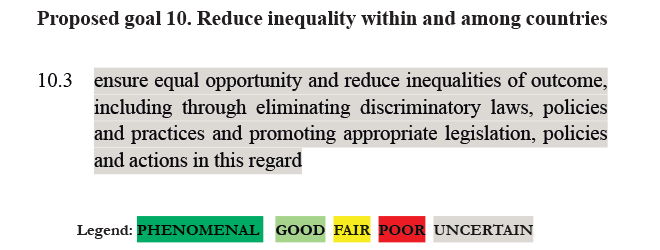
RATING: The economic arguments about this target are UNCERTAIN – The economic evidence suggests that increased economic growth and supporting outcomes of the poorest are not in opposition – both can happen at the same time. There is some evidence that targeting the most marginalized will yield higher benefits than targeting non-marginalized because typically, they are coming from a lower base. However costs, including political and non-economic, will be likely be higher for this group.
The rights argument for this target however, is strong and arguably, a more decisive factor than the economics. The important factor here is identifying the right indicators that will actually measure reductions in inequality – and in this regard indicators that measure relative progress between social groups are likely to be best.
Download the entire report
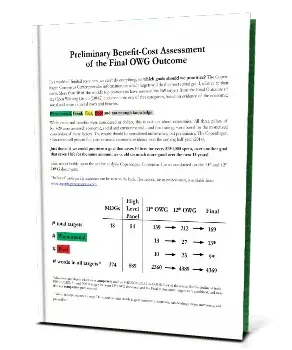
In our recent report, not just the target above, but all 169 targets have been assessed by 60 teams of the world’s top economists. The targets have been categorized into five ratings based on evidence of economic, social, and environmental costs and benefits. While we applaud that the UN Open Working Group's final outcome document contains 43 fewer targets than the previous document, we are concerned that many targets have simply been combined, therefore reducing the number of both phenomenal and poor targets assessed according to our cost-benefit analysis. Our new assessment includes suggestions for how these can be improved as reported in this article by the Financial Times.