UN OWG Proposed Target 3.9
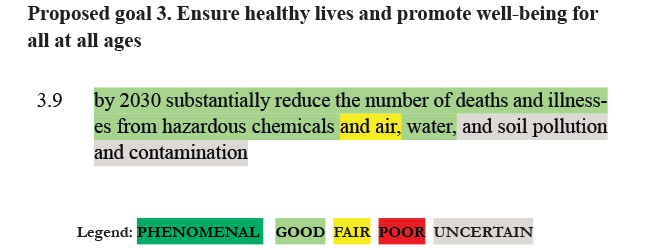
RATING: GOOD – while it can be costly to manage hazardous chemicals, the release of these substances into the environment can create significant health problems. There is a solid economic case to restrict the release of such substances into air, water and soil
For air pollution the rating is FAIR, but with uncertainty. Previous research suggests interventions reducing indoor air pollution have a FAIR rating (e.g. Hutton et al, 2008). However, recently updated Global Burden of Disease figures suggest that deaths from indoor air pollution are much higher than expected. There are certain nuances within the exposure function that must be considered when assessing cost and benefits. Regarding outdoor air pollution there again is evidence that reduction in outdoor air pollution through improved vehicle fuel standards, filtering of pollution at the source can have GOOD benefits.
The main causes of death and illness from water pollution relate to water availability and sanitation. Interventions to improve this have a GOOD rating (see target 6.2).
For soil pollution the rating is UNCERTAIN, since there is not enough available evidence.
Download the entire report
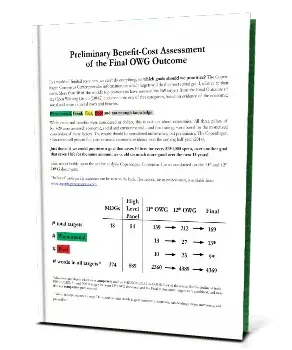
In our recent report, not just the target above, but all 169 targets have been assessed by 60 teams of the world’s top economists. The targets have been categorized into five ratings based on evidence of economic, social, and environmental costs and benefits. While we applaud that the UN Open Working Group's final outcome document contains 43 fewer targets than the previous document, we are concerned that many targets have simply been combined, therefore reducing the number of both phenomenal and poor targets assessed according to our cost-benefit analysis. Our new assessment includes suggestions for how these can be improved as reported in this article by the Financial Times.