UN OWG Proposed Target 4.1
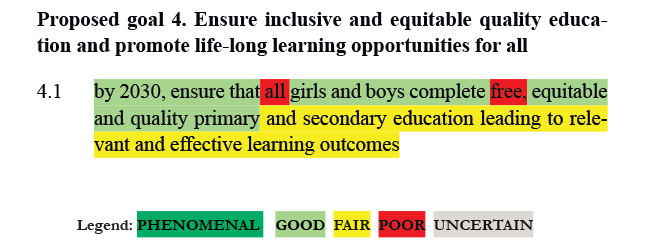
RATING: ‘GOOD’ for primary education and ‘FAIR’ for secondary education though it should be noted that goals promoting universal education have been promised since 1960s, and have all failed. That said, the prioritization should be for girls, over boys since girls tend to be further behind in education attainment and investment in girls education is associated with high social returns. ‘Free’ education for all should not be a policy goal, since the costs are disproportionate to the benefits for the upper levels of education and the sources of finance are uncertain. If anything, it should be free for those who cannot afford it. ‘Equitable’ education is another general term that should be avoided without specifying what it means, e.g. should all citizens achieve secondary education to 18 years? This does not even consider the costs of financing.
For improving the quality of education the rating is FAIR (Psacharopoulos, 2014) though the body of evidence on education quality is small. Among the few studies that report costs, a typical finding is that an increase of 1 standard deviation of test scores costs $100 (Kremer et al., 2013). An estimate of average social rates of return to education quality interventions is 15%, which corresponds to a benefit cost ratio of 3 to 5.
Better wording: Increase access of girls to primary education
Download the entire report
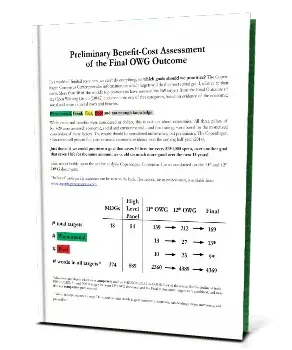
In our recent report, not just the target above, but all 169 targets have been assessed by 60 teams of the world’s top economists. The targets have been categorized into five ratings based on evidence of economic, social, and environmental costs and benefits. While we applaud that the UN Open Working Group's final outcome document contains 43 fewer targets than the previous document, we are concerned that many targets have simply been combined, therefore reducing the number of both phenomenal and poor targets assessed according to our cost-benefit analysis. Our new assessment includes suggestions for how these can be improved as reported in this article by the Financial Times.