UN OWG Proposed Target 6.3
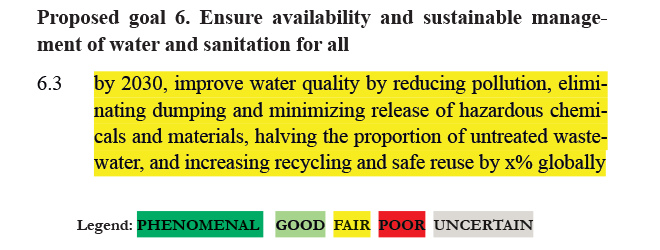
RATING: FAIR – but depends on the interventions taken to improve ‘water quality’. If it means installing capital-intensive secondary treatment facilities across the globe, then this is very unlikely to occur by 2030. However, there are localized, cheaper interventions that can be implemented to improve water quality such as filters. Reducing pollution is an ambitious goal, but the focus on dumping of toxic materials is sensible, since there are stronger incentives to remove toxicity versus less harmful (but still harmful) pollution.
For improving wastewater treatment, recycling and reuse - the limited evidence suggests FAIR BCR (Asian Development Bank, 2013; Aram and Malinova, 2003; Murray and Drechsel, 2011). A large part of the benefit is environmental which entails complex cost-benefit analyses that need more research and time to assess properly (Drechsel et al., 2014).
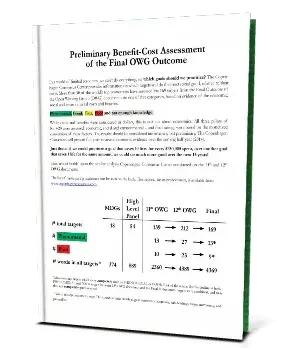
Download the entire report
In our recent report, not just the target above, but all 169 targets have been assessed by 60 teams of the world’s top economists. The targets have been categorized into five ratings based on evidence of economic, social, and environmental costs and benefits. While we applaud that the UN Open Working Group's final outcome document contains 43 fewer targets than the previous document, we are concerned that many targets have simply been combined, therefore reducing the number of both phenomenal and poor targets assessed according to our cost-benefit analysis. Our new assessment includes suggestions for how these can be improved as reported in this article by the Financial Times.